





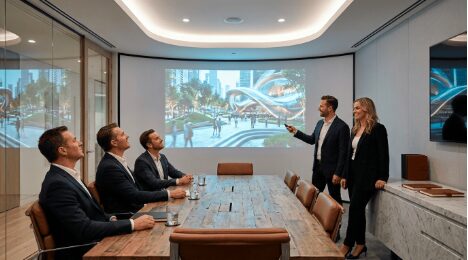
The traditional agency pitch is undergoing a radical transformation. For decades, creative directors relied on static mood boards and expensive, time-consuming storyboards to convey a vision. These tools often left a “vision gap” where the client had to imagine the motion, the lighting, and the emotional resonance of the final product.
This ambiguity is dangerous in high-stakes environments like Direct-to-Consumer (DTC) advertising or cinematic storytelling. When a client cannot see the final vision, they are less likely to approve ambitious concepts. This leads to safe, repetitive content that fails to capture attention in a crowded digital landscape.
Today, advanced video technology is closing that gap. Agencies are now moving beyond flat images to present fully realized cinematic prototypes. This shift is not just about speed. It is about precision, repeatability, and the ability to prove a concept before a single camera is ever rented.
The Evolution of Creative Pre-Visualization
In the past, pre-visualization (pre-vis) was a luxury reserved for big-budget feature films. It required specialized teams and weeks of labor. For most marketing agencies, the process was restricted to rough sketches or stock footage montages.
The emergence of the ai video generator has democratized this capability. Agencies can now generate high-fidelity video sequences that match their specific brand guidelines in minutes. This allows for a more iterative process where creative teams can explore dozens of directions without exhausting their budget.
Generative tools are fundamentally altering how strategy and execution overlap. By lowering the cost of experimentation, agencies can present bolder ideas with lower perceived risk.
Solving the Problem of AI Unpredictability
One major hurdle in early AI adoption was the lack of control. Many creators felt they were fighting against a black box. They would “burn tokens” on generations that looked impressive but did not follow the creative brief.
Professional environments require more than just a prompt box. They require granular orchestration. This is where higgsfield changes the landscape for professional creators. It moves the industry away from simple text-to-video toward a structured command center.
Modern agencies need tools that offer:
- First-and-last image referencing to define the exact start and end of a scene.
- Motion-reference uploads that allow creators to dictate specific camera movements.
- Character consistency across multiple shots to maintain brand identity.
- Repeatable workflows that ensure a successful generation can be replicated.
Deep Dive into Seedance 2.0 and Professional Standards
The technical requirements for agency-grade video are significantly higher than for casual social media content. This is why models like Seedance 2.0 have become essential. Developed by ByteDance, Seedance 2.0 is a state-of-the-art model designed for cinematic precision.
Unlike basic models, Seedance 2.0 can accept up to 12 different assets as inputs. This includes text, images, videos, and even audio. This multi-modal approach allows agencies to feed the model exact brand assets, ensuring the output is grounded in reality.
The capabilities of this model include:
- Native Audio Sync: The video motion actually responds to the audio input.
- Cinematic Multi-Shot Videos: The model understands how to transition between different camera angles.
- Frame-Level Precision: Creators can ensure that every single frame meets quality standards.
- Character Stability: The “hero” of the video looks the same from the first second to the last.
By using an ai video generator that incorporates Seedance 2.0, agencies can produce content that looks less like a “glitchy AI” and more like a high-end production. This model is available on all subscription plans within the higgsfield workspace.
Strategies for Integrating AI Video into Client Pitches
To successfully change how you present concepts, you must adopt a strategic approach. It is not enough to show a cool video. You must show a video that solves a business problem.
1. Use AI for “Living” Mood Boards
Instead of a grid of static images, present a 30 second reel of atmospheric clips. These clips should establish the lighting, the pace, and the “vibe” of the campaign. This sets the emotional stage for the client before you even show the script.
2. Prototype Complex Motion
If your concept involves a complex camera move, such as a 360 degree orbit around a product, use motion-reference tools. By uploading a rough video of the movement, the ai video generator can render a polished version with the correct lighting and textures.
3. Test Multiple Aesthetics Rapidly
Clients often struggle to choose between different visual styles. You can use higgsfield to generate the same scene in three different styles: neon-noir, minimalist-clean, and cinematic-warm. This allows the client to make a data-backed decision on the visual direction.
4. Bridge Art and Data
Modern marketing is driven by performance. Use tools like the Virality Predictor within your production suite to explain why certain visual choices were made. This bridges the gap between the creative vision and the client’s need for ROI.
Why Professional Infrastructure Matters
As agencies scale their use of AI, the need for a unified workspace becomes apparent. Juggling multiple subscriptions for different models is inefficient. It also leads to fragmented workflows where assets are lost across different platforms.
The professional approach is to use a command center that aggregates the best engines in the world. Accessing Kling, Veo, and Sora through a single interface allows for a “best-of-breed” strategy. If one model excels at landscapes but another is better at human motion, you should be able to use both in the same project.
Higgsfield serves as this essential infrastructure. It acts as a specialized editing environment where visual ideation meets repeatable production. This setup eliminates the technical hurdles of setting up local environments or managing complex API integrations.
The Shift from Generation to Orchestration
The word “generator” is becoming an understatement. We are entering the era of “orchestration.” In this era, the human creator is the conductor, and the ai video generator is the orchestra.
The conductor does not just ask for “music.” They dictate the tempo, the volume, and the specific instruments. Similarly, an agency using higgsfield can dictate:
- The exact lens focal length for a shot.
- The intensity of the motion.
- The specific color palette for the highlights and shadows.
- The timing of transitions to match a specific audio beat.
This level of control ensures that every generation is purposeful. It turns the AI from a source of random inspiration into a reliable studio-grade tool.
Actionable Tips for Agencies Starting Today
If your agency is ready to revolutionize its presentation style, follow these steps to integrate AI video effectively:
- Start Small: Use AI to enhance one specific part of your next pitch, such as the opening sequence.
- Prioritize Consistency: Use image-to-video features to ensure your brand characters look consistent.
- Focus on Story: Do not let the tech overshadow the message. The video should serve the narrative.
- Iterate with the Client: Show “work in progress” AI drafts to get client buy-in early in the process.
The goal is to eliminate the unpredictability that has plagued AI video in the past. By using a platform like higgsfield, you ensure that your creative vision is never limited by the constraints of a single model.
Conclusion: The Future of the High-Stakes Pitch
The agencies that win in the next decade will be those that can visualize their ideas the fastest and with the most precision. The “vision gap” is closing. Clients no longer have to imagine what a campaign might look like. They can see it, feel it, and approve it before the production phase even begins.
Using an ai video generator is no longer a gimmick. it is a foundational part of the modern creative workflow. By providing total control over the creative process, platforms like higgsfield allow agencies to deliver cinema-grade results at scale.
This is the bridge between raw AI power and professional output. It is the transition from “prompting” to “producing.” As the technology continues to evolve, the agencies that master these tools will be the ones that define the next generation of digital content.